
Our solutions
SOLAR PARKS
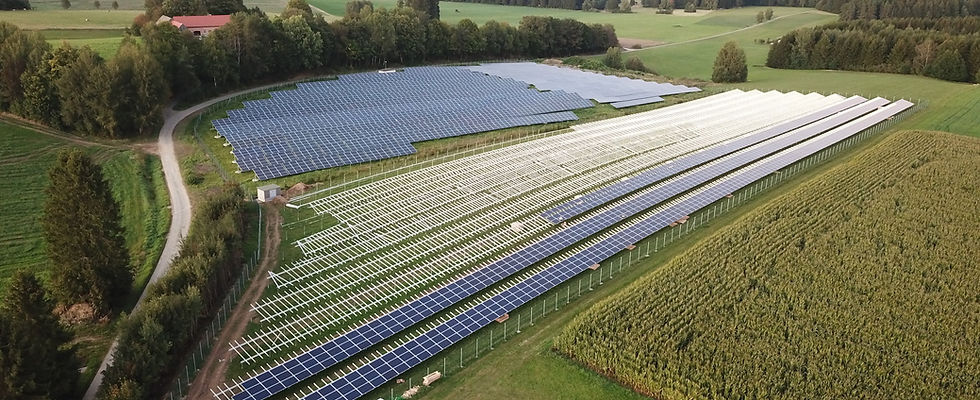
Green energy. Sustainable. Recyclable.
Ground-mounted photovoltaic (Freiflächen-Photovoltaikanlagen / FFPV) systems convert sunlight directly into electricity using solar modules mounted on support structures in the ground. Unlike rooftop systems, FFPV systems utilize larger, unsealed areas and generate electricity on an industrial scale. Typically, several megawatts peak power are installed at a single site.
The generated direct current is converted into grid-compliant alternating current via inverters and fed directly into the public power grid. Proven technologies are used in this process, including monocrystalline silicon modules, string or central inverters, and soil-friendly driven or screw foundations.
Site criteria for ground-mounted photovoltaic systems
When searching for suitable locations, we focus on brownfield sites, marginal agricultural land, and areas along highways and railway lines that are exposed to noise and/or pollutant emissions. We pay attention to nature conservation and historic preservation concerns, building planning regulations, and involve the local authorities in our project from an early stage.
Contribution to the energy transition
FFPV plants are a key pillar of the energy transition. They enable the generation of large quantities of CO₂-free electricity with a comparatively small land requirement (approx. 1.5 ha/MW). Their scalability and short development times allow them to efficiently close supply gaps – for example, through targeted integration into regional power grids or as a basis for PPA-based supply solutions for industry.
Benefits for people and nature
Besides generating green electricity, open-field solar installations have other positive effects on the environment – the land remains unsealed despite the technical use, as the posts for the modules are simply driven into the ground. The areas are neither fertilized nor intensively farmed, thus providing habitat for various animal species and contributing to increased biodiversity.
Since the soil can also regenerate during the operating period, there is a chance that the area will have a higher agricultural yield potential after the plant is dismantled than before.
At the end of its service life, the plant will be completely dismantled and can be used for agricultural purposes again.